Stinging insect nest removal demands exact identification of insect biology to eliminate defensive colonies before they breach domestic living spaces. In historic neighborhoods like Shandon, Old Shandon, and…
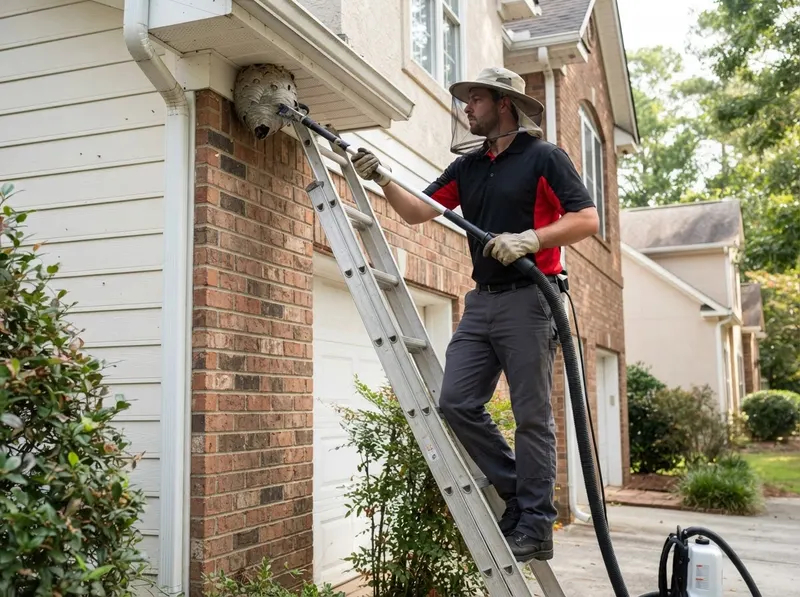
Stinging insect nest removal demands exact identification of insect biology to eliminate defensive colonies before they breach domestic living spaces. In historic neighborhoods like Shandon, Old Shandon, and Cottontown, colonial soffits, deep eaves, and decorative rafter tails frequently shelter active colonies of Clemson University Cooperative Extension cataloged social wasps. Rather than relying on generic airborne aerosols that scatter aggressive foragers across adjoining yards, CopperVale Insect Defense applies directional knockdown agents and microencapsulated barriers directly to the brood chambers. Standard field operations isolate the nesting site using calibrated application gear that adheres strictly to EPA Worker Protection Standard regulations, neutralizes defensive sentries instantly, and prevents defensive swarming near windows, play areas, and outdoor living zones.
Aerial paper wasps beneath porch ceiling trim require a different containment sequence than subterranean yellowjacket cavities common along the sandy loam boundaries of Rosewood and Olympia. Subterranean colonies often establish inside abandoned rodent burrows or along root voids near garden perimeters. Attempting consumer-grade liquid flooding commonly fails because colony architecture includes secondary escape tunnels that redirect agitated foragers outward. Technicians align localized applications with guidelines established by the National Pesticide Information Center, delivering non-volatile dust formulations into underground galleries that adhere to foraging worker bodies, carrying active toxicants directly to the reproductive queen. In heavily wooded parcels throughout Forest Acres and Heathwood, dense tree canopies support massive bald-faced hornet nests constructed from chewed wood fiber; these require structural detachment pole systems and protective containment bags to pull the brood core without spreading biological debris onto lower branches or walkways.
The trade-off between isolated nest extraction and exterior structural fortification centers on recurring insect reproduction. Single-nest knockdown neutralizes the immediate stinging hazard present on that day, whereas integrating residual perimeter treatments forms an impenetrable chemical barrier along high-risk void areas such as fascia lines, chimney flashing, and vent screens. Following technical safety directives from the Occupational Safety and Health Administration regarding elevated structural work, technicians survey rooflines, dormers, and masonry vents in architectural zones like Earlewood, Elmwood Park, and Melrose Heights. Chemical selections prioritize environmental stewardship under guidance from the South Carolina Department of Health and Environmental Control and align with regional ecological directives from the South Carolina Department of Natural Resources, ensuring that target-specific knockdown does not compromise beneficial native pollinators in adjoining parklands near the Columbia Canal and Riverfront Park or Sesquicentennial State Park. Every physical removal includes removal of the paper envelope and mechanical scraping of the anchoring pedicle, preventing future queens from reusing pheromone-marked nesting sites during consecutive warm seasons.
Every job gets a firm, written price after a free on-site visit.
Tell us about your stinging insect nest removal job in columbia and we'll send a clear, written quote, usually the same day.
 CopperVale Insect Defense