Residential properties in Columbia face heightened vector pressures due to prolonged humidity and dense pine-straw groundcover. Shaded vegetative zones in older neighborhoods like Shandon, Heathwood, and Forest Acres…
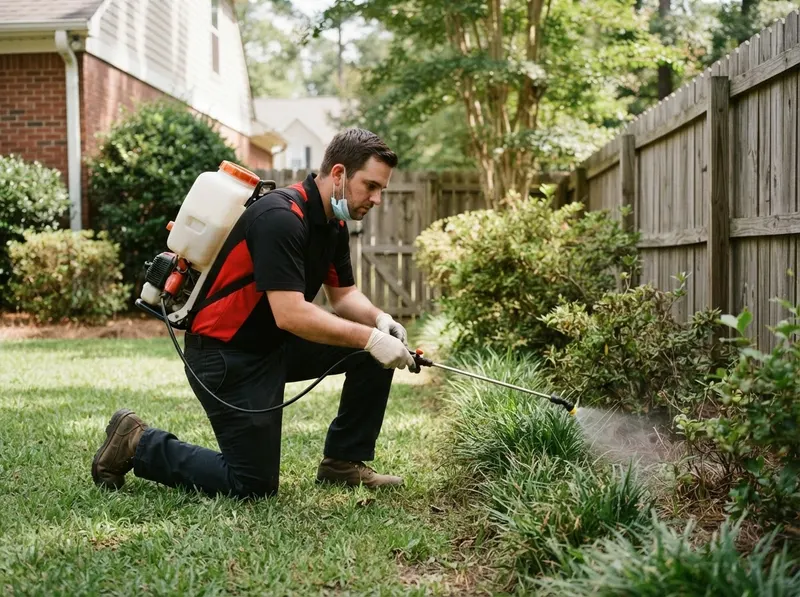
Residential properties in Columbia face heightened vector pressures due to prolonged humidity and dense pine-straw groundcover. Shaded vegetative zones in older neighborhoods like Shandon, Heathwood, and Forest Acres create microclimates where the blacklegged tick thrives alongside the cat flea. Implementing professional flea and tick yard remediation establishes an authoritative exterior shield, halting parasitic migrations along fence lines and dense decorative shrubbery without resorting to interior broadcast spraying. Technicians evaluate property boundaries using ecological guidelines outlined by the Clemson Cooperative Extension, identifying moisture reservoirs under mature oak canopies that shelter blood-feeding nymphs.
Effective defense requires understanding the operational difference between broad-spectrum spraying and stratified barrier suppression. A basic broadcast application disperses a transient surface mist that degrades rapidly under intense ultraviolet radiation, leaving sub-thatch flea cocoons untouched. In contrast, layered yard remediation integrates concentrated micro-encapsulated formulations validated under the EPA Pesticide Programs with moisture-activated granules that penetrate heavy thatch layers. This structured treatment binds tightly to soil particles per testing standards from the ASTM International environmental committee, preventing runoff into adjacent watershed basins like the Saluda River basin while shielding pet runs and open lawns.
Ground conditions dictate the operational scope across distinct Columbia parcels. In riverfront or low-elevation terrain near Olympia, historic mill villages, and the Columbia Canal corridor, elevated moisture levels accelerate larval incubation cycles. Properties adjoining natural creek corridors require deliberate buffer management adhering to guidance from the South Carolina Department of Natural Resources, ensuring non-target aquatic species remain unaffected during fence-line barrier sprays. For wooded perimeters adjacent to Sesquicentennial State Park, the exterior boundary extends into tree-line interfaces where rodent carriers drop engorged ticks, aligning remediation protocols with containment practices supported by the Centers for Disease Control and Prevention.
Homeowners managing established grounds in Elmwood Park, Cottontown, and Earlewood often face deep organic litter accumulations that harbor overwintering ticks. CopperVale Insect Defense applies mechanical perimeter assessments aligned with recommendations from the Entomological Society of America, focusing treatment on ecotones where manicured grass transitions into damp leaf litter. Field safety protocols follow standards maintained by the Occupational Safety and Health Administration to protect landscape staff during granular calibration. Property owners can consult soil data through the Natural Resources Conservation Service and review vector suppression benchmarks from the National Pest Management Association to understand perimeter persistence. Regional vector monitoring data recorded by the South Carolina Department of Health and Environmental Control underscores that sustained suppression requires targeted residual chemistry rather than reactionary indoor treatments.
Every job gets a firm, written price after a free on-site visit.
Tell us about your flea and tick yard remediation job in columbia and we'll send a clear, written quote, usually the same day.
 CopperVale Insect Defense